
1 in 4 people will be affected by a mental health condition such as depression, schizophrenia, or bipolar disorder in their lifetime. While most current treatments target brain chemicals like serotonin and dopamine, many patients, up to a third don’t respond. New research suggests the key may lie beyond the brain.
In a new study, researchers used Mendelian randomisation, a genetic technique leveraging large-scale population datasets, to examine the role of the immune system in seven major neuropsychiatric conditions:
- Depression
- Schizophrenia
- Bipolar disorder
- Anxiety
- Alzheimer’s disease
- Autism spectrum disorder
- ADHD
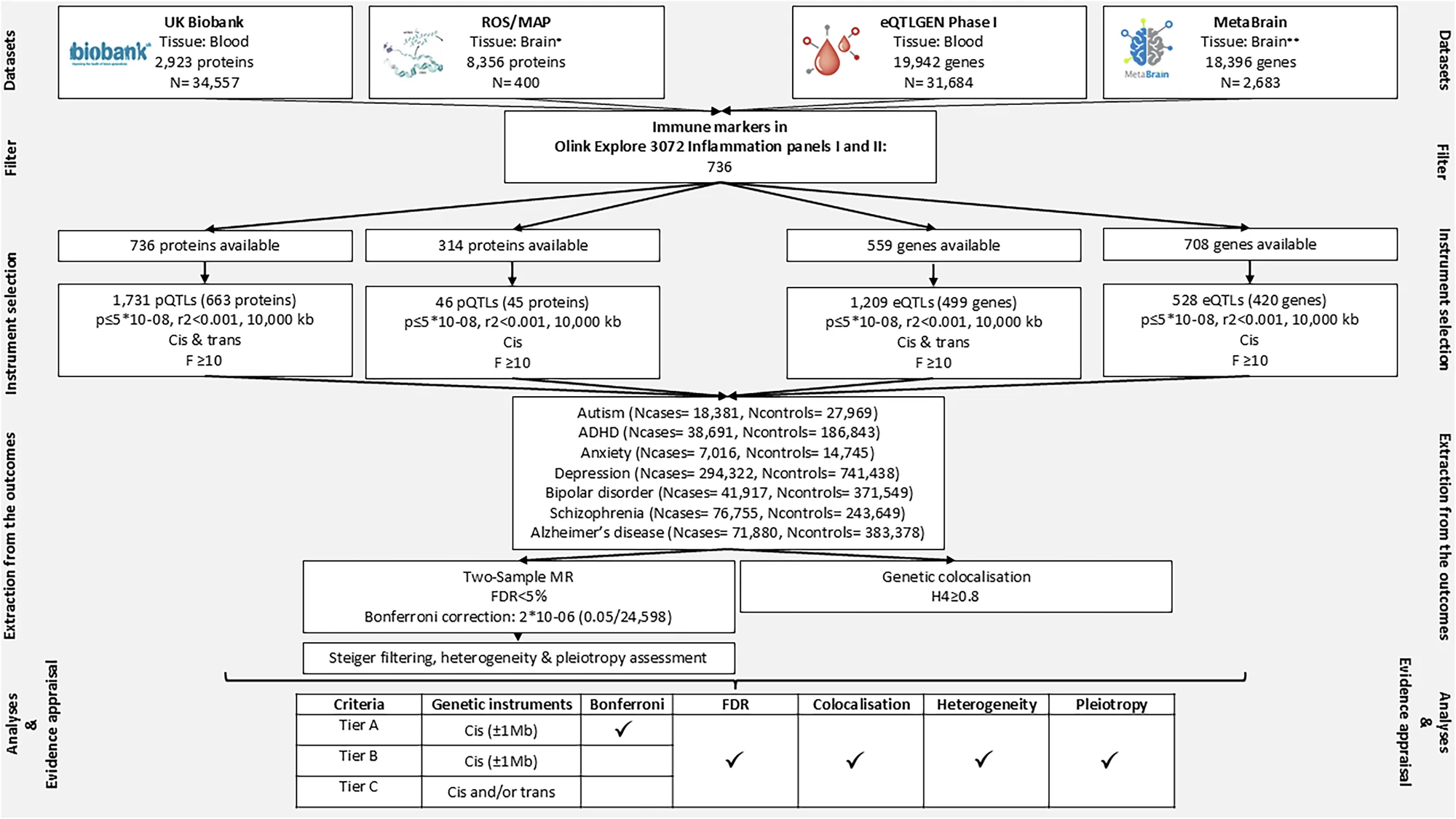
By analysing 735 immune-related proteins in human blood, the team identified 29 immune proteins that may play a causal role in these mental health conditions (Figure 1).
- Of the 29 implicated immune proteins, 20 are already targeted by existing drugs for other conditions.
- This opens the door to repurposing these drugs to treat mental illnesses, potentially speeding up the development of new therapies.
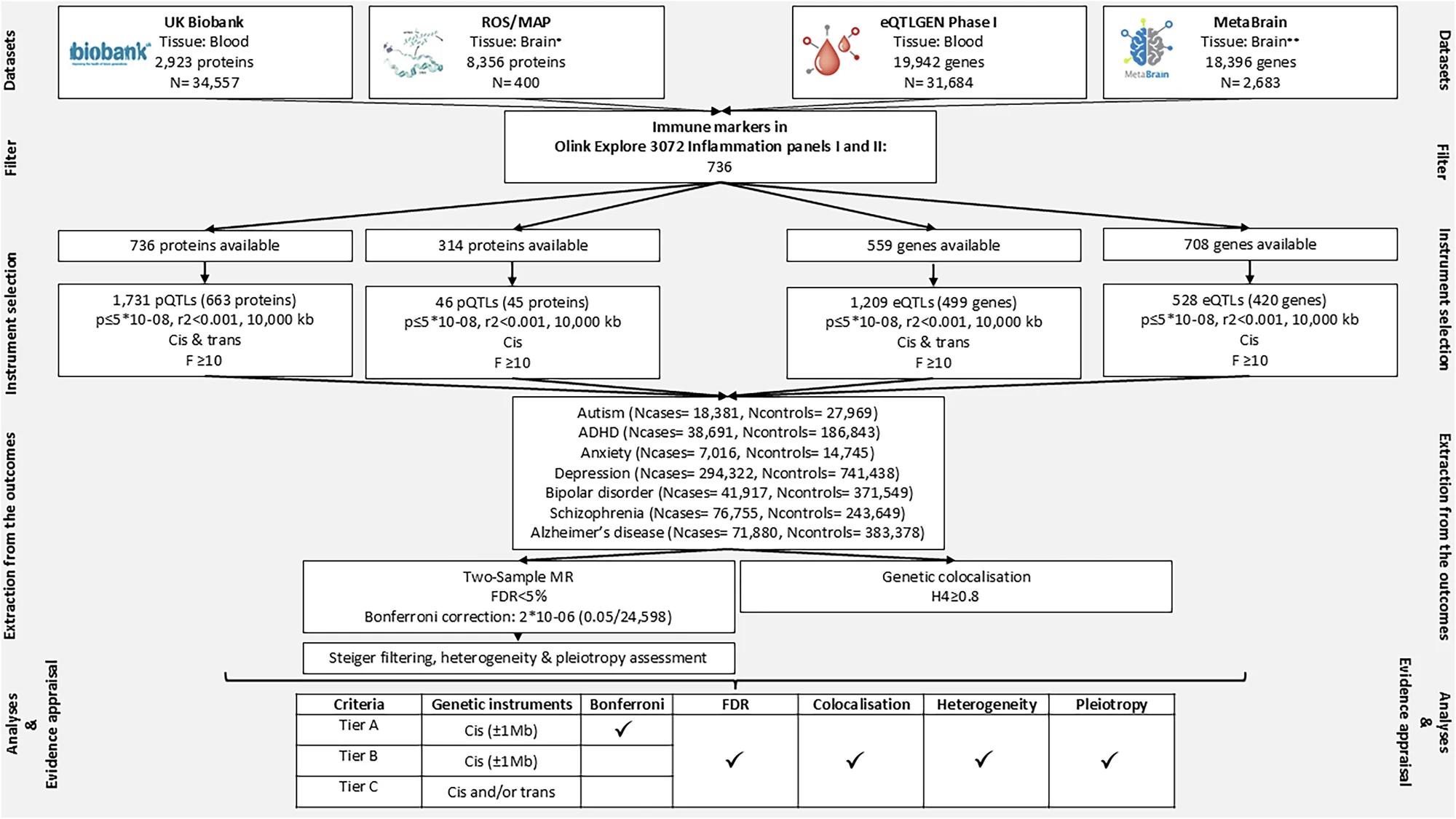
Figure 1: Analytic pipeline for assessing potentially causal immunological biomarkers for neuropsychiatric conditions and approach for evidence appraisal.
This research offers a paradigm shift: mental health disorders may arise from immune dysregulation as much as from neurochemical imbalance. The team’s next steps include:
- Testing these biomarkers in clinical trials
- Investigating immune-targeting drugs for psychiatric use
- Understanding how inflammation leads to symptoms
This holistic approach could redefine how we treat and understand mental health, bringing immune-modulating therapies into psychiatric care.
Journal article: Dardani, C., et al., 2025. Immunological drivers and potential novel drug targets for major psychiatric, neurodevelopmental, and neurodegenerative conditions. Molecular Psychiatry.
Summary by Stefan Botha
