
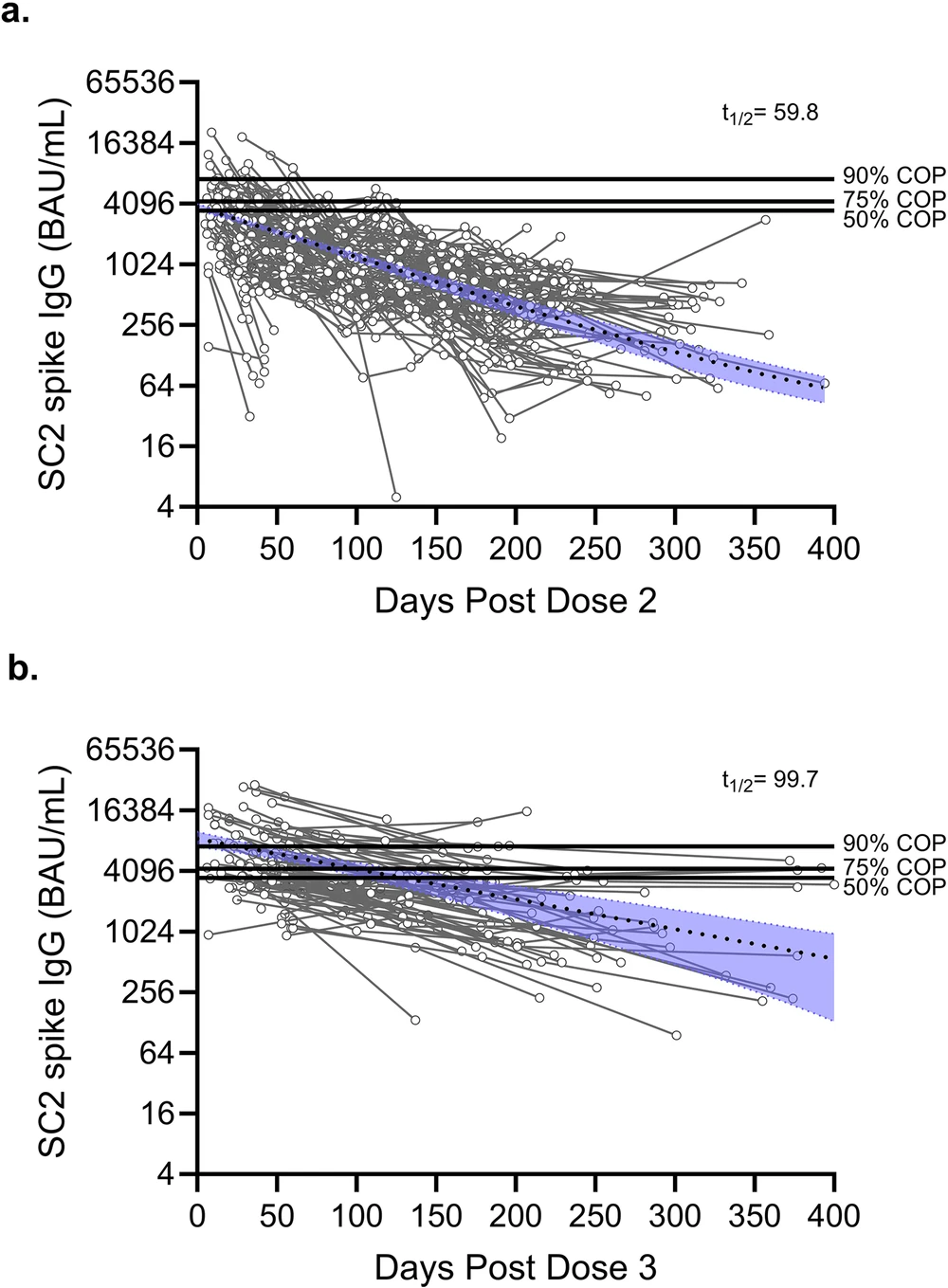
A new longitudinal study tracked anti-wildtype SARS-CoV-2 spike IgG levels monthly in healthy adults from 2020 onwards, analysing responses after mRNA vaccinations and in the context of so-called hybrid immunity (vaccination + infection) (Figure 1).
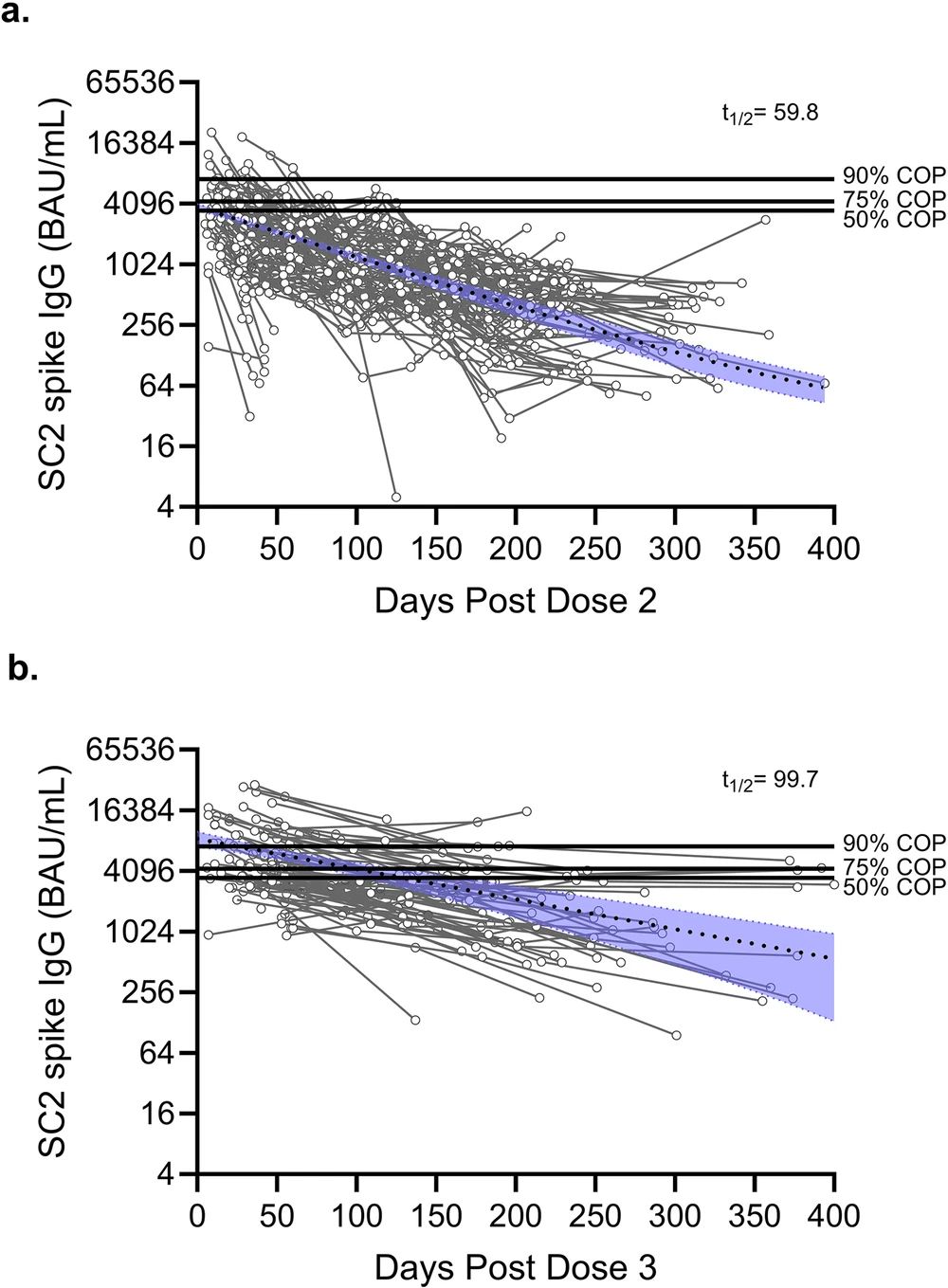
Figure 1: Vaccine-induced SARS-CoV-2 IgG durability improves after three doses. Serum samples from participants after receipt of (a) two BNT162b2 doses (n = 221) and (b) an mRNA booster immunization (n = 113) were tested for IgG against SARS-CoV-2 (SC2) WT spike in an antigen-based multiplex immunoassay. Half-life (t1/2) was calculated using a one phase decay curve model (dotted line) with a plateau constraint at an IgG level associated with a serostatus threshold cutoff in this test, 14.4 BAU/mL (WHO Binding Antibody Units). The 95% confidence intervals are shown in the blue shaded areas. Horizontal black lines at 3500 BAU/mL (50% COP), 4300 BAU/mL (75% COP), and 7200 BAU/mL (90% COP) represent antibody thresholds previously reported as protective percentages during the first Omicron BA.1, BA.1.1 wave16. COP correlate of protection.
- A booster dose significantly improves antibody durability relative to the primary two-dose series.
- The addition of infection (i.e., hybrid immunity) further strengthens and prolongs the antibody response.
- For younger, healthy adults (< 60 years of age), these kinetics may help inform optimal timing for future vaccine doses or booster strategies.
