
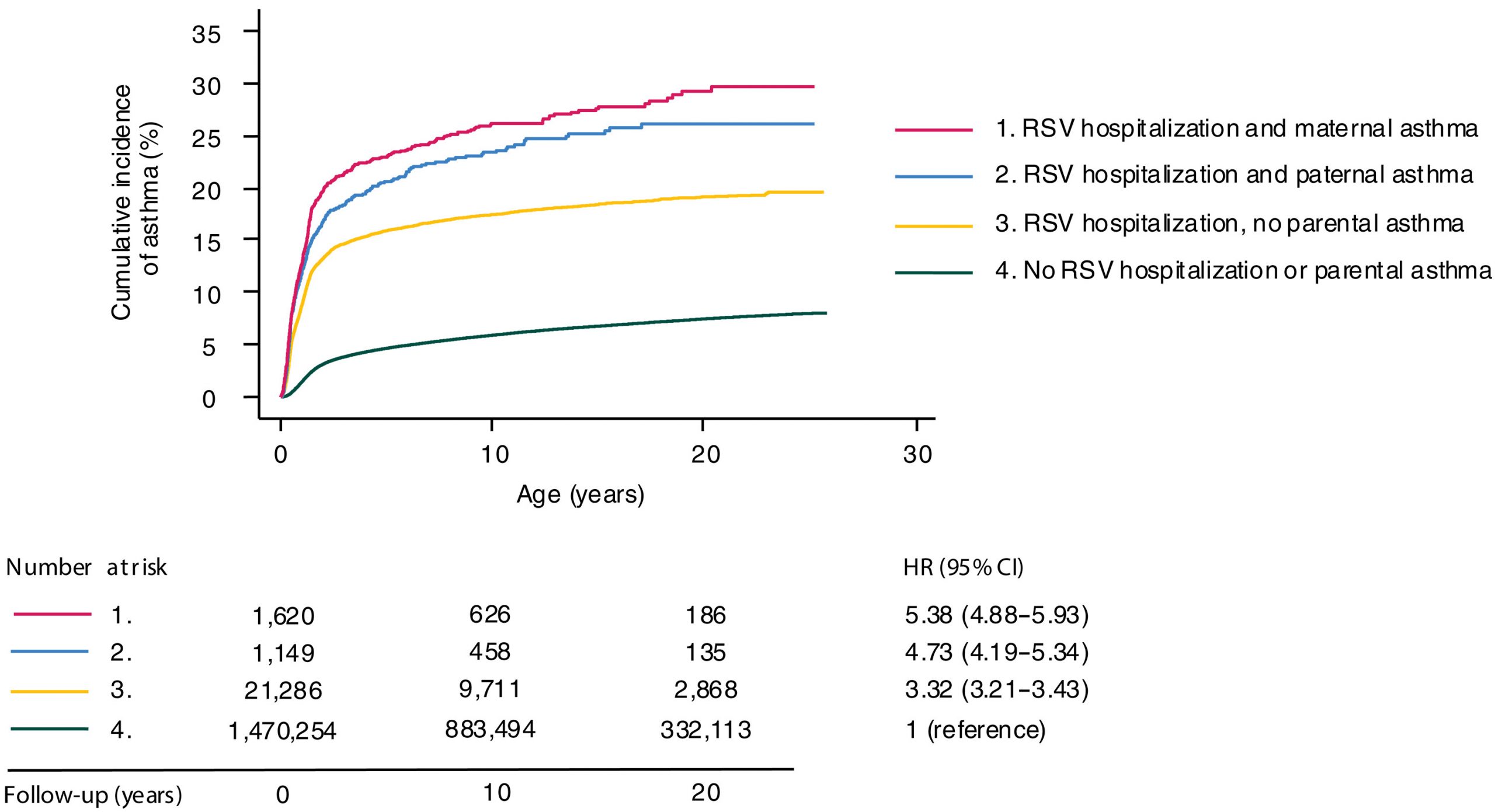
New research shows that protecting infants from RSV could prevent asthma later in life. A major international study has uncovered compelling evidence that respiratory syncytial virus (RSV) infection in early infancy sharply increases the risk of developing childhood asthma (Figure 1). The findings suggest that preventing RSV infection in newborns could dramatically reduce asthma cases, especially among children already genetically predisposed to allergies.
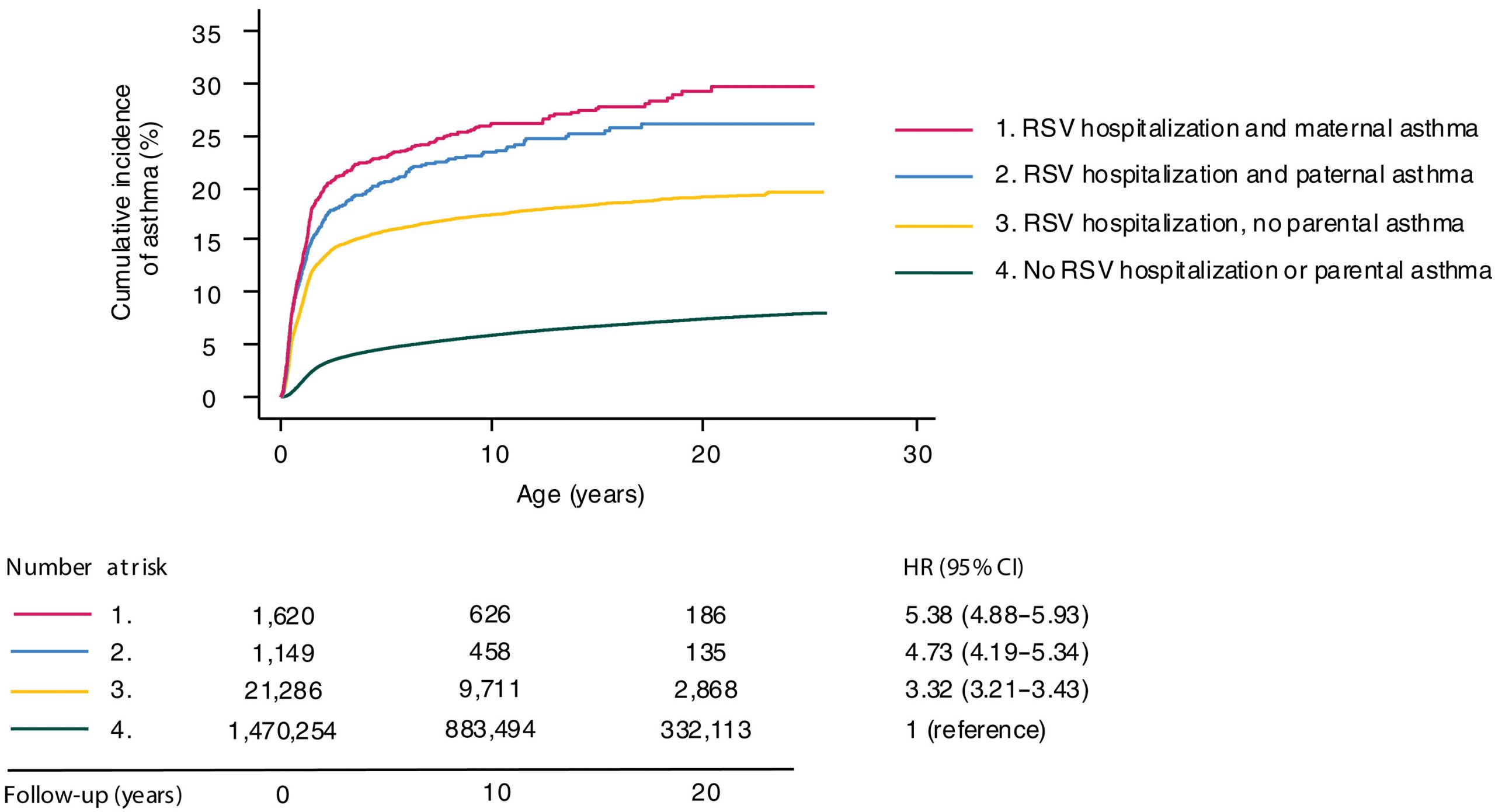
Figure 1: Cumulative incidence of asthma according to RSV hospitalization during infancy and parental asthma status. Kaplan-Meier curves showing cumulative incidence of asthma by hRSV hospitalization during infancy and parental asthma status. Cox regression models adjusting for age and sex were used to assess risk of asthma according to RSV hospitalization and parental asthma status. RSV hospitalization during infancy was admission with ICD-10 diagnoses B974, J121, J205, and J210 in the first 6 months of life. Asthma was admission with ICD-10 diagnoses J45 or J46 in 1994 to 2018. Data were collected from 1994 to 2018.
- Early RSV infection in the first months of life
- Inherited allergy risk, transmitted through allergen-specific antibodies from the parents
- Nationwide Danish registry data, covering every child and their parents
- Controlled laboratory experiments examining infant immune responses
