
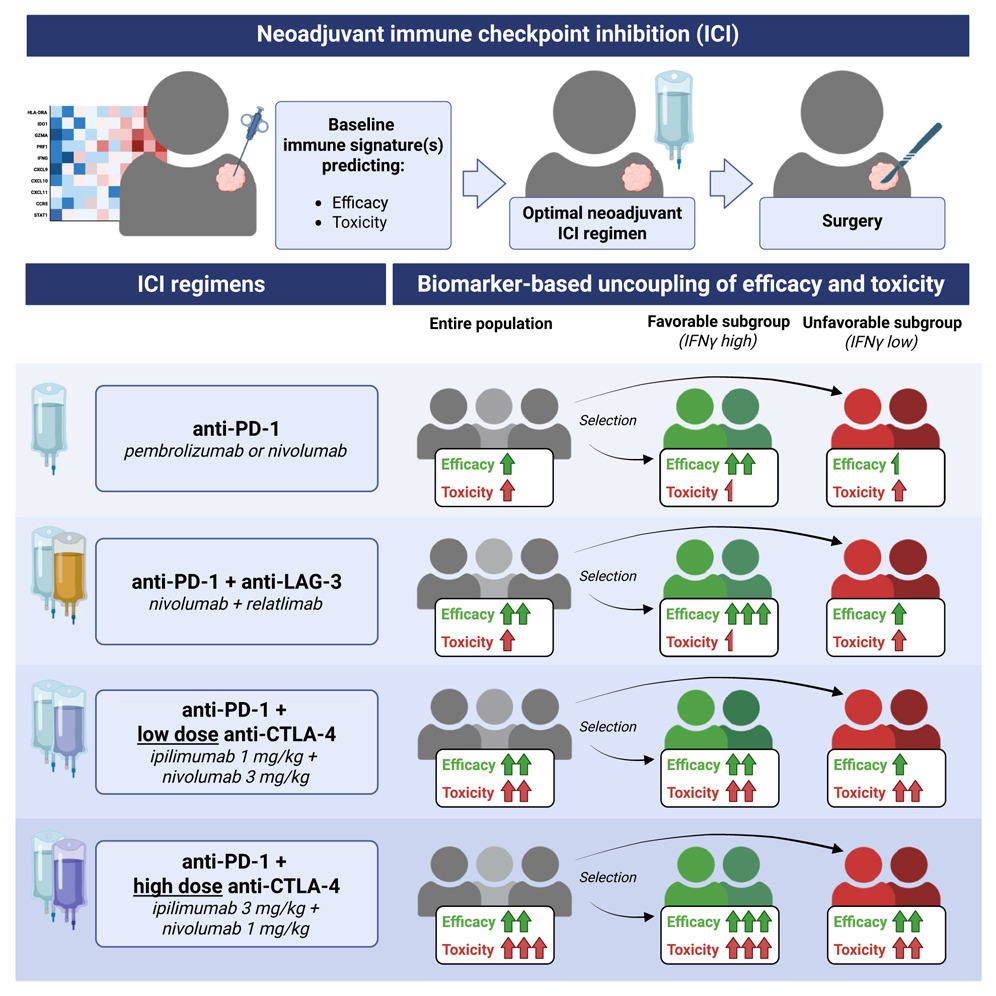
New analysis suggests immune signatures can guide safer, more effective checkpoint inhibitor combinations in melanoma (Figure 1).
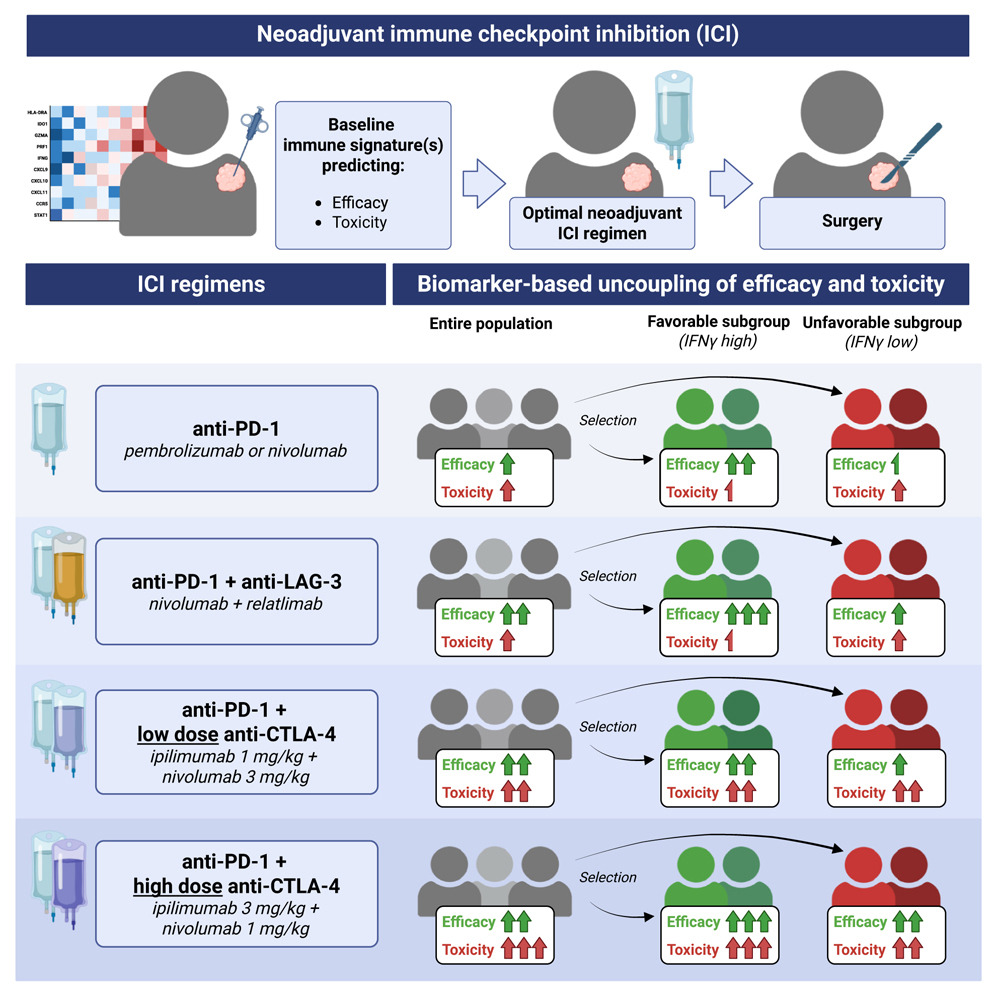
Figure 1: Graphical abstract.
- Anti–PD-1 alone
- Anti–PD-1 + low-dose anti–CTLA-4
- Anti–PD-1 + high-dose anti–CTLA-4
- Anti–PD-1 + anti–LAG-3
- In IFN-γ–high tumours, adding (especially high-dose) anti–CTLA-4 substantially increased toxicity but did not improve efficacy over anti–PD-1 alone.
- In contrast, in IFN-γ–low tumours, adding high-dose anti–CTLA-4 significantly improved response rates, while toxicity remained comparatively low.
- Does this patient need stronger immune activation to respond?
- Is this patient already primed and therefore more vulnerable to immune toxicity?
- Improve outcomes in patients with immune-cold tumours
- Reduce unnecessary toxicity in immune-hot patients
- Enable more rational sequencing of PD-1, CTLA-4, and emerging checkpoints like LAG-3
