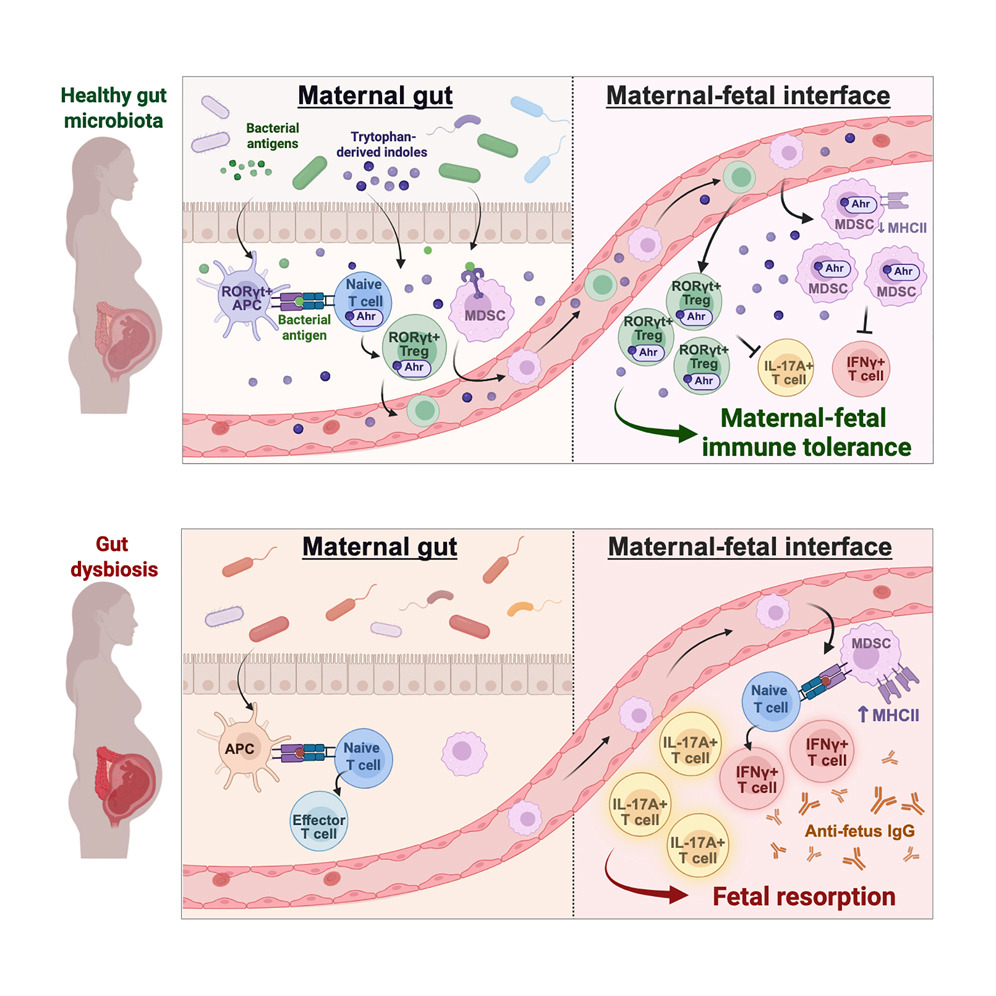
New research shows that beneficial bacteria train the maternal immune system to tolerate the developing fetus (Figure 1).
Pregnancy poses a remarkable immunological challenge: the mother’s immune system must remain vigilant against infection while simultaneously tolerating a genetically distinct fetus. When this delicate balance fails, it can lead to recurrent miscarriage or stillbirth outcomes that remain unexplained in more than half of affected women. A new preclinical study reveals that gut microbes play a central role in teaching the maternal immune system how to protect pregnancy. The findings identify specific microbial metabolites that promote immune tolerance at the placenta and dramatically improve pregnancy outcomes in mice. The researchers focused on how the maternal immune system adapts during pregnancy to avoid attacking fetal tissues. They discovered that beneficial gut bacteria produce tryptophan-derived metabolites that travel to the maternal–fetal interface and help recruit two key immune cell populations:- Myeloid-derived suppressor cells (MDSCs)
- RORγt⁺ regulatory T cells (pTregs)
- Germ-free mice, raised without exposure to microbes
- Antibiotic-treated mice, with disrupted gut microbiota
- These metabolites directly, or
- The bacteria capable of producing them
- Reduced levels of tryptophan-derived metabolites
- Fewer MDSCs and pTregs
- Further define microbiome–immune interactions during pregnancy
- Explore dietary, probiotic, or metabolite-based interventions
- Collaborate with clinicians to translate these discoveries into patient care


