
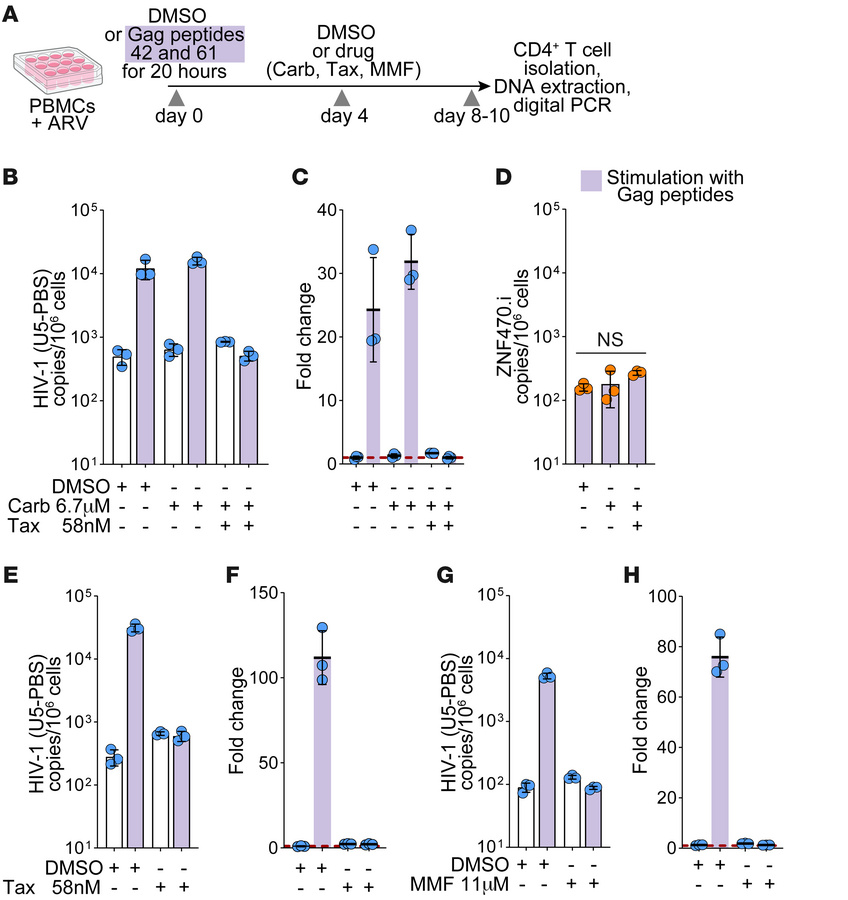
Researchers uncover how chemotherapy-like strategies may selectively eliminate HIV-infected immune cells (Figure 1).
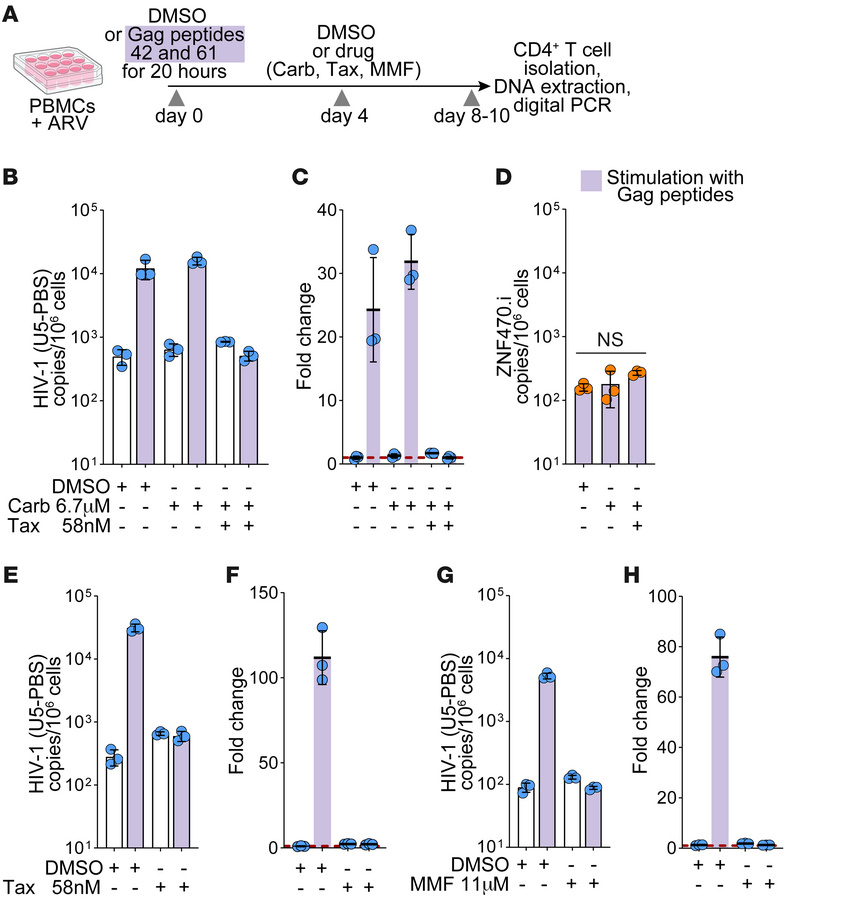
Figure 1: Antiproliferative drugs abrogate the proliferation of HIV-1–infected cells reactive to Gag peptides. (A) Schematic representation of the culture experiments. ARV, antiretroviral drugs. (B, E, and G) Impact of carboplatin (Carb), paclitaxel (Tax), and MMF on the proliferation of the ZNF721i clone carrying an intact HIV-1 provirus. Data are shown as the mean ± SD; each symbol indicates a replicate well. All measurements were obtained at the end of culture. (D) The ZNF470i clone, nonreactive to Gag peptides, is not affected by treatment with Tax. One-way ANOVA; P value = 0.153. (C, F, and H) Fold increase in HIV-1 DNA copies relative to unstimulated cells treated with DMSO. Colored bars indicate conditions in which cells were stimulated with Gag peptides. Empty bars indicate conditions without Gag peptide stimulation.
- Paclitaxel and carboplatin,
- Mycophenolate mofetil (an antiproliferative drug), or
- No treatment (control).
